25 January, 2015

Zemanta wasn't working in Firefox... uninstalled, reinstalled

Zemanta
Zemanta (Photo credit: Wikipedia)
25-Jan-2015


Yesterday, I was posting some of the articles, and I noticed that Zemanta is still not working. That it didn't work a week ago when I did some posting was still acceptable - I took it as a temporary glitch.

But yesterday, I had to try it on Internet Explorer, to eliminate Firefox. It wasn't also working in IE, so I came to identify that Zemanta add-on is the problem.

Since I am favoring Firefox over Internet Explorer for my blogging, I went to disable and enable Zemanta in Firefox. That meant restarting Firefox each change, of course.

Tried editing the article, and still, Zemanta isn't working.

Since removing and adding the add-on (or extension, to be precise) is easy, I did that next.

Removed. Added back in.

When Firefox was restarted after the reinstallation of the extension, there it was: Zemanta working like a charm!

I went back to the posts that didn't have the Zemanta touch, and yes, blogging with Zemanta is back!

C'est tout!

15 January, 2015

Versatility of Graphene, Material of Tomorrow

English: Energy of electrons in graphene in th...
English: Energy of electrons in graphene in the tight-binding model, http://dx.doi.org/10.1103/PhysRev.71.622 Deutsch: Energie der Elektronen in Graphen mit Impuls k im Tight-Binding model, entsprechend http://dx.doi.org/10.1103/PhysRev.71.622 Alemannisch: Ällägdronaänrgie im Graphen mid ämana Impulz k im Tight-Binding-Modell, ändsprächad http://dx.doi.org/10.1103/PhysRev.71.622 (Photo credit: Wikipedia)
BY NICK BILTON


Graphene is the strongest, thinnest material known to exist. A form of carbon, it can conduct electricity and heat better than anything else. And it is not only the hardest material in the world, but also one of the most pliable.

Only a single atom thick, it has been called the wonder material.

Graphene could change the electronics industry, ushering in flexible devices, supercharged quantum computers, electronic clothing and computers that can interface with the cells in your body.

While the material was discovered a decade ago, it started to gain attention in 2010 when two physicists at the University of Manchester in England were awarded the Nobel Prize for their experiments with it. More recently, researchers have zeroed in on how to produce graphene commercially.

The American Chemical Society said in 2012 that graphene was discovered to be 200 times stronger than steel and so thin that 28 grams of it could cover 28 football fields. Chinese scientists have created a graphene aerogel, an ultralight material derived from a gel that is one-seventh the weight of air. Sixteen cubic centimeters of the material could balance on one blade of grass.

“Graphene is one of the few materials in the world that is transparent, conductive and flexible – all at the same time,” said Dr. Aravind Vijayaraghavan, a lecturer in nanomaterials at the University of Manchester. “All of these properties together are extremely rare to find in one material.”

So what do you do with graphene?

Physicists and researchers say that we will soon be able to make electronics that are thinner, faster and cheaper than anything based on silicon, with the option of making them clear and flexible. Long lasting batteries that can be submerged in water are another possibility.

In 2011, researchers at Northwestern University in Illinois built a battery that incorporated graphene and silicon, which the university said could lead to a cellphone that “stayed charged for more than a week and recharged in just 15 minutes.” In 2012, the American Chemical Society said that advancements in graphene were leading to touch-screen electronics that “could make cellphones as thin as a piece of paper and foldable enough to slip into a pocket.”

Dr. Vijayaraghavan is building an array of sensors out of graphene – including gas sensors, biosensors and light sensors – that are far smaller than what has come before.

This month, researchers at the Samsung Advanced Institute of Technology, working with Sungkyunkwan University in South Korea, said Samsung had discovered how to create high-quality graphene on silicon wafers, which could be used to produce graphene transistors. Samsung said in a statement that these advancements meant it could start making “flexible displays, wearables and other next-generation electronic devices.”

Sebastian Anthony, a reporter at Extreme Tech, said that Samsung’s breakthrough could end up being the “holy grail of commercial graphene production.”

Samsung is not the only company working to develop graphene. Researchers at IBM, Nokia and SanDisk have been experimenting with graphene to create sensors, transistors and memory storage.

James Hone, a professor of mechanical engineering at Columbia University in New York, said research in his lab led to the discovery that graphene could stretch by 20 percent while remaining able to conduct electricity.

Another fascinating aspect of graphene is its ability to be submerged in liquids without oxidizing, unlike other conductive materials.

As a result, Dr.Vijayaraghavan said, graphene research is leading to experiments where electronics can integrate with biological systems. In other words, you could have a graphene gadget implanted in you that could read your nervous system or talk to your cells.

When these electronics finally hit store shelves, they could look and feel like nothing we’ve ever seen.


Taken from TODAY Saturday Edition, April 26, 2014


21 December, 2014

Liquid-Cooled Computers to Cut Costs

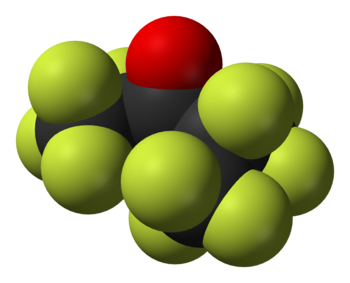
Space-filling model of the Novec 1230 molecule...
Space-filling model of the Novec 1230 molecule, dodecafluoro-2-methylpentane-3-one, C 6 F 12 O. (Photo credit: Wikipedia)
English:
English: (Photo credit: Wikipedia)
I would like to see this technology implemented across-the-board. Question is, the savings, where will it go? 
-----


BY ERIC PFANNER


TOKYO – Dropping a home computer into a vat of liquid would wreck it.

 Yet some operators of supercomputers are submerging their machines in liquids, without causing any apparent damage, to keep them from overheating. Advocates say submersion cooling could solve one of the biggest challenges of the digital economy: reducing the air-conditioning bills and environmental strains of the power-hungry servers and supercomputers that crunch ever-rising mountains of data.

A prototype supercomputer at the Tokyo Institute of Technology, which is submerged in a tank of mineral oil, has been named in an industry ranking, the Green 500, as the most energy-efficient machine of its kind. The computer, called Tsubame KFC, is 50 percent more powerful than an older supercomputer there but uses the same amount of energy.

“The university administration said, ‘You’re not going to get any more power,’” said Satoshi Matsuoka, the project leader. “But we still wanted more performance.”

Japan is driven to reduce electricity consumption since the March 2011 earthquake and tsunami that caused a meltdown at the Fukushima Daiichi power plant. The country idled other nuclear facilities, cutting electricity generating capacity sharply.

The use of liquids to cool supercomputers and powerful servers is not limited to Japan. The technology used by the Tokyo institute was developed by a company in Austin, Texas called Green Revolution Cooling.

Iceotope, a start-up based in Sheffield, England, submerges computers in liquid fluoroplastic, rather than oil. And in Hong Kong, Allied Control, a company that designs cooling systems, used submersion technology for a recently opened data center.

Unlike water, mineral oil and liquid fluoroplastics do not conduct electricity. Therefore, experts says, there is no risk of short-circuiting the equipment.

Peter Hopton, chief executive of Iceotope, said data centers that use air-conditioning could cut their energy bills and infrastructure costs in half by using submersive cooling.

“We’re talking about millions in savings, every year,” he said.

Some supercomputers consume tens of millions of dollars’ worth of energy annually, while the biggest corporate data centers have electricity bills of hundreds of millions of dollars, much of that going for air-conditioning.

Water is used widely as a coolant, but usually it is piped through the facilities or the machines.

Cray, the American supercomputer maker, used submersion cooling for one of its machines in the 1980s. But the method was not widely used, in part because of concern about the high cost and the ozone-depleting effects of the coolants of that era.

Iceotope and the Hong Kong system use new fluids, including one from 3M called Novec 1230.3M says it is not ozone-depleting and has been exempted from the list of volatile organic compounds issued by the United States Environmental Protection Agency.

Mr.Hopton said Novec provided more cooling power than mineral oil.

But Christiaan Best, chief executive of Green Revolution, said that mineral oil was almost as effective and considerably less expensive. Novec 1230, which is more commonly used in sophisticated fire extinguishing equipment, costs about seven times more than mineral oil, he said.

To test viability of its new system, the Tokyo institute erected a small building to house Tsubame KFC just outside a larger lab that contains an existing heat-producing supercomputer. That will give the academics a chance to determine whether Tsubame KFC can function even when the oil warms up to summertime temperatures. They think it might be possible because modern semiconductors can operate at higher temperatures, Professor Matsuoka said.

Only a few modification were necessary to enable Tsubame KFC to be submerged, he said. Moving parts like hard drives and fans to be removed, for example.

Green Revolution’s mineral oil cooling method has been used at several data centers, including facilities operated by the United States Department of Defense. Intel conducted a study of the system and found that its servers had suffered no adverse effects, and power consumption was cut sharply.

Mr. Best said that so far, academic institutions that operate supercomputers had been more willing to experiment with the technology than the than the corporations that run data centers.

“You can imagine,” he said, “if we walk in and say, ‘Why don’t you take your data center and put it in oil,’ you have to have something pretty solid to point to.”


Taken from TODAY, Saturday Edition, March 8, 2014