Showing posts with label China. Show all posts

29 February, 2012

AIDS casualty figure in China unveiled

Was this supposed to be kept from the public? Now it will be in the Google search, but maybe not in China...
-----

Posted: 21 January 2012


Photo illustration of HIV testing
BEIJING: AIDS killed 28,000 people in China last year, and another 48,000 new infections from the HIV virus were discovered in the country, according to an official report on Saturday.

In China 780,000 people live with the HIV virus, of whom 154,000 developed AIDS, a report jointly produced by China's Ministry of Health, the Joint United Nations Programme on HIV/AIDS and the World Health Organisation said.

In September 2011 there were 136,000 people receiving anti-viral treatment for the disease, it said, making the treatment coverage rate 73.5 percent, an increase of 11.5 percentage points compared to 2009.

The report, quoted by China's official state media Xinhua, said some new trends had appeared, notably "a rise in the number of imported cases and those transmitted sexually".

Sexual relations are the first source of contamination of the HIV virus in China, where a huge blood contamination scandal erupted in the central Henan province in the 1990s.

HIV/AIDS sufferers have long been stigmatised in the country, and rights groups estimate the number of sufferers to be higher, but increased government education has helped raise awareness.

- AFP/wk


Taken from ChannelNewsAsia.com; source article is below:
AIDS casualty figure in China unveiled


Enhanced by Zemanta

08 April, 2010

Chinese official blasts Google

Google China OfficeImage by bfishadow via Flickr
I was looking up on the status of Google in China, and seems like the news is not that much. Anyway, this news article may already be a couple of weeks old, but some details may yet be unknown to some, if not many.

I would like to know what's your reaction to this world event. I say that it is a world event, as everybody is watching. Read on.

----------
A Chinese official has blasted Google for "violating its written promise", following the U.S. company's decision to move its search traffic to Hong Kong while leaving just its sales and research and development teams in China.

According to a China Daily news report filed Tuesday, the unnamed official from the Internet bureau under the country's State Council Information Office, said Google went back on its agreement to filter its search engine. His allegation was unleashed four hours after Google announced in a blog post its move to Hong Kong.

"Google has violated its written promise it made when entering the Chinese market, by stopping [the] filtering of its [search] service and blaming China in insinuation for alleged hacker attacks," the official said. "This is totally wrong. We're uncompromisingly opposed to the politicization of commercial issues, and express our discontent and indignation to Google for its unreasonable accusations and conducts."

According to one Chinese analyst, Google's stance smacks of "big power" gestures by Western countries harking back to the 19th century in attempts to prise the once-closed economy.

The unnamed commentator, who wrote in the Hong Kong-based Chinese newspaper Sing Tao Daily, noted that China's top leaders have themselves stressed the issue of opening the country up to the world. Google, however, is challenging the Chinese government's sovereignty by demanding it accepts Google's definition of "opening up", he said.

Source article is here.
----------

What's on your mind? Do leave your comments.


Reblog this post [with Zemanta]

24 March, 2010

Google to leave China

Undermining Freedom of Expression in China: The Role of Yahoo!, Microsoft and Google
google-china-google.cn-redirects-google.hk-hon...Image by Shekhar_Sahu via Flickr


Google to leave China on April 10: state media
Posted: 19 March 2010 1211 hrs

SHANGHAI: US Internet giant Google will close its business in China next month and may announce its plans in the coming days, Chinese media reported on Friday, after rows over censorship and hacking.

The China Business News quoted an official with an unidentified Chinese advertising agency as saying Google would go through with its threatened withdrawal on April 10, but that Google had yet to confirm the pull-out.

The agency is a business partner of Google, the report said.

The report did not specify whether Google would close all or part of its operations in the country.

The newspaper quoted an unidentified Google staff member as saying the company may announce on Monday the details of its exit from China and compensation for its local staff.

Google China spokeswoman Marsha Wang declined to comment on the report, telling AFP only that there had been "no update" on the company's situation.

The report was the latest in a series of clues to emerge recently indicating Google planned to leave China, which has the world's largest population of online users, at 384 million.

-----
A Chinese Google user presents flowers in front of 'Google' sign outside Google China headquarters building in Beijing.
-----
Google has cried foul over what it said were cyberattacks aimed at its source code and the Gmail accounts of Chinese human rights activists.

The Financial Times reported last week that Google was "99.9 per cent" certain to abandon google.cn, citing an unnamed source.

Chinese media said Wednesday that Google sent a notice to clients saying google.cn could close at the end of March.

The issue has sparked a simmering war of words between China and the administration of US President Barack Obama, which has called on Beijing to allow an unfettered Internet.

The dispute has exacerbated mounting tensions between the two over a range of trade and diplomatic issues.

Beijing tightly controls online content in a vast system dubbed the "Great Firewall of China", removing information it deems harmful such as pornography and violent content, but also politically sensitive material.

Google has continued to filter google.cn results to abide by Chinese censorship demands, but says it will eventually stop the screening.

Google confirmed earlier this week that it had received a letter purportedly from a group of 27 Chinese advertising agencies calling for the US company to open talks on compensation for possible business losses if it leaves China.

However, representatives of several of the firms subsequently told AFP they knew nothing of the letter and Chinese media reports have raised doubts about its authenticity.

Google's Wang told AFP the company is still "reviewing" the letter.

- AFP/yb

From ChannelNewsAsia.com; see the source article here.
----------

Reblog this post [with Zemanta]

Google stops China censorship...

Google China's logoImage via Wikipedia

Google stops China censorship, Beijing condemns move
Posted: 23 March 2010 1508 hrs


WASHINGTON - A day after Google said it would no longer censor its search engine results in China, angering Beijing, Chinese access to websites covering sensitive topics remained blocked Tuesday.

Google announced Monday in a blog post that it had shifted mainland Chinese users of its Google.cn search engine to an uncensored site in the former British colony Hong Kong, drawing anger from Beijing and raising questions about the Web giant's future in the world's biggest online market.

But Tuesday, searches from mainland computers of subjects like "Falun Gong" and "June 4" -- referring to the Tiananmen pro-democracy protests in 1989 -- produced the message: "Internet Explorer cannot display the web page."

-----

A stand builder fixes a Google logo at an exhibition booth

-----

The same searches on Google.com.hk from computers in Hong Kong displayed full results -- suggesting that China was deploying its "Great Firewall" of web censorship.

While ending censorship in China, the Mountain View, California-based Google said it planned to keep sales, research and development teams in the country of some 384 million Internet users.

Google's decision came a little more than two months after the Internet titan threatened to close its Chinese operations because of censorship and cyberattacks it said originated from China.

China said Google was "totally wrong" to stop censorship and blame Beijing for the cyberattacks that allegedly targeted the email accounts of Chinese human rights activists.

"Google has violated its written promise it made when entering the Chinese market by stopping filtering its searching service," said the official in charge of the Internet bureau of the State Council Information Office.

"We're uncompromisingly opposed to the politicization of commercial issues, and express our discontent and indignation to Google for its unreasonable accusations and conduct."

The White House said it was "disappointed" Google could not reach a deal with Beijing and reiterated that US President Barack Obama is "committed to Internet freedom and... opposed to censorship."

Drummond, Google's top lawyer, said "figuring out how to make good on our promise to stop censoring search on Google.cn has been hard.

"We very much hope that the Chinese government respects our decision, though we are well aware that it could at any time block access to our services."

Google co-founder Sergey Brin told The New York Times that shifting the Chinese service to Hong Kong was not given a clear-cut stamp of approval by Beijing but "there was a sense that Hong Kong was the right step."

"There's a lot of lack of clarity," he said. "Our hope is that the newly begun Hong Kong service will continue to be available in mainland China."

Drummond said "the Chinese government has been crystal clear throughout our discussions that self-censorship is a non-negotiable legal requirement."

He said providing uncensored search from Hong Kong is "entirely legal and will meaningfully increase access to information for people in China."

Beijing tightly controls online content, removing information it deems harmful such as pornography and violent content, but also politically sensitive material.

Google launched Google.cn in January 2006 after agreeing to censor websites for content banned under Chinese law. Google.cn is the second-largest search engine in China after Chinese search engine Baidu.com.

Google's decision to end censorship in China was welcomed by human rights and technology groups and US lawmakers.

"It is a remarkable, and welcomed, action and an important boost of encouragement for millions of Chinese human rights activists and political and religious dissidents," said US Representative Christopher Smith, a Republican
from New Jersey.

Arvind Ganesan, business and human rights director at Human Rights Watch, called it "an important step to challenge the Chinese government's use of censorship to maintain its control over its citizens."

"Google has taken a courageous position against censorship," said Lucie Morillon of Paris-based media rights group Reporters Without Borders.

Leading Chinese dissident Wei Jingsheng, who spent nearly two decades in prison and now lives in the United States, said he knew China "would not back down."

"But we also knew that Google's motto was 'Don't be evil.' So there was no point on which to compromise," Wei said.

Leslie Harris, president of the Center for Democracy & Technology, praised what she called Google's "continued effort to enable China's people with unfiltered access to robust sources of information from all over the world."

- AFP/ir

From ChannelNewsAsia.com; see the source article here.

----------


Reblog this post [with Zemanta]

China nixes Google censorship move

National emblem of the People's Republic of ChinaImage via Wikipedia

China says Google "totally wrong" to stop web censorship
Posted: 23 March 2010 0655 hrs


BEIJING - China said Tuesday Google had "violated its written promise" and is "totally wrong" to stop censoring its Chinese language search engine and to blame Beijing for alleged hacker attacks.

The comments came from an official in charge of the Internet bureau of the State Council Information Office, according to the state-run Xinhua news agency.

"Google has violated its written promise it made when entering the Chinese market by stopping filtering its searching service and blaming China in insinuation for alleged hacker attacks," said the official.

"This is totally wrong. We're uncompromisingly opposed to the politicisation of commercial issues, and express our discontent and indignation to Google for its unreasonable accusations and conducts," the official added.

Hours earlier Google said it had ended censorship of its Chinese-language search engine Google.cn and was redirecting mainland Chinese users to an uncensored site in Hong Kong.

-----

Google China office in Beijing

-----

Google also said it intended to continue research and development work in China and to maintain a sales presence there.

Google's lifting of censorship on Google.cn comes a little more than two months after the Mountain View, California-based company said it had been the victim of cyberattacks originating from China.

The White House said it was disappointed that Google could not reach a deal with Beijing.

"We are disappointed that Google and the Chinese government were unable to reach an agreement that would allow Google to continue operating its search services in China on its Google.cn website," National Security Council spokesman Mike Hammer said in a statement.

- AFP /ls

From ChannelNewsAsia.com; see the source article here.

----------


Reblog this post [with Zemanta]

25 February, 2010

How Can Google Be Hacked?

Image representing Google as depicted in Crunc...Image via CrunchBase

SCHOOLS DENY GOOGLE HACKING
---------------------------

SHANGHAI - Two prominent schools in China dispute allegations that hacking attacks on Google and other firms originated from them, Xinhua news agency reported.

The New York Times reported last Thursday that security investigators traced the hacking to computers at Shanghai Jiaotong University and Lanxiang Vocational School in China.

Xinhua cited an unnamed Jiaotong University spokesperson on Saturday as saying the allegation against it is baseless, and an official at the vocational school said its investigation found no evidence the attacks originated there.

Mr Li Zixiang, a Communist party official in the Lanxiang school in the eastern Shandong province, said students there are currently on their winter break.

He also disputed NYT's report that some evidence linked attacks to one computer science class taught by a Ukrainian.

"We have never employed any foreign staff," Mr Li was quoted as saying.

Mr Zhou Hui, director of the school's general office disputed the NYT's report that Lanxiang had close ties to the military. He told Xinhua that some students had joined the military after school, but it was natural for citizens to do so.

Google revealed Jan 12 that digital thieves had stolen some of its computer code and tried to break into the accounts of human rights activists opposed to China's policies.

The digital assault was so serious that Google has said it's prepared to shut down its China-based search engine and the company and the government are still discussing a possible compromise. AP

From TODAY, Monday, 22-Feb-2010
----------

Reblog this post [with Zemanta]

19 February, 2010

The misuse of computer knowledge at work?

Google's first production server rack, circa 1999Image via Wikipedia

2,400 FIRMS, GOVT AGENCIES HIT BY HACKERS
-----------------------------------------

SAN FRANCISCO - Coordinated cyber attacks launched from Europe and China breached computers at firms and government agencies worldwide in the past 18 months, The Wall Street Journal reported on Wednesday.

The Journal quoted computer security firm NetWitness as saying the attacks made mountains of data vulnerable to mining by hackers, although the damage had yet to be fully assessed.

Information bared to hackers ranged from credit card transactions to intellectual property of slightly more than 2,400 victims, including 10 US government agencies, according to the Journal.

The hacking operation began in late 2008 in Germany and has yet to be stopped, NetWitness said.

Workers at companies were tricked into visiting websites or opening email attachments that promised to clean viruses from computers but instead infected machines.

Malicious code used in the attacks allowed hackers to seize control of computers remotely. Evidence cited by NetWitness indicated the culprits may be Eastern European gangsters.

The report came in the wake of Google revealing it was targeted by a sophisticated cyber attack aimed at the US firm's source code and Gmail accounts of Chinese human rights activists around the world. Computer industry specialists subsequently said more than 30 companies were hit by those attackers.

The apparent online espionage prompted Google to vow it would stop bowing to Chinese censors and shut down its China search service if it cannot operate unfettered. Google continues to filter searches in accordance with Chinese law while trying to negotiate a compromise with officials there. AFP

From TODAY, Friday, 19-Feb-2010

----------

Reblog this post [with Zemanta]

14 August, 2009

China: Filtering software will not be required

google china home page 2008Image by Gen Kanai via Flickr

And after so much hoo-hah about filtering and screening software put upon PC manufacturers and also Google, China relents, or relaxes.

Whatever the term that you find appropriate to call it, they are no longer mandating the filtering software.

Read that news here.


Reblog this post [with Zemanta]

China mobile users face jail for sexy texts

Dragon boat racing, a popular traditional Chin...Image via Wikipedia

The phone being an easy way of doing things, right or wrong, now will have some "limiting clause" on its usage. So if you are one of those who find it an easy way with an easy escape route on its use of flirting or the likes, beware. Especially in China.

Read this news here.

Reblog this post [with Zemanta]

26 June, 2009

Not just porn, no to 'health' sites too

google in chinaImage by El Tipo Gráfico via Flickr

05:55 AM Jun 26, 2009

BEIJING - China's crackdown on Internet pornography will be extended to health-related sex information, according to new regulations that tighten supervision of such content.

The authorities will monitor such information to prevent obscene content from slipping through and stop pornographic operations posing as health websites, said the rules posted on Wednesday on the health ministry website.

"It is strictly forbidden to disseminate vulgar content in the name of spreading sexual knowledge," it said.

The new regulation comes as China steps up a campaign to wipe out Internet pornography. The government has told computer makers that all personal computers sold from July 1 must be shipped with anti-pornography software.

United States trade officials sent a letter to their Chinese counterparts on Wednesday urging them to revoke an order that requires a controversial Internet filtering software to be installed on computers.

The new regulation applied to websites that bill themselves as health-based, including those run by research institutes and private companies. Violators face fines of 3,000-10,000 yuan ($640-$2,130) in the case of non-commercial websites and more than 10,000 yuan for commercial sites.

However, the paper said authorities should make sure access to legitimate sex information is not cut off, calling it a key sexual education tool.

Yesterday China accused Google of spreading pornography after Chinese users were unable to connect to the search giant's site. "We have found that the English version of google.com has spread lots of pornographic, lewd and vulgar content, which is in serious violation of Chinese laws and regulations," said Foreign Ministry spokesman Qin Gang.

He said the authorities summoned Google representatives and told them to "remove the material immediately". He did not respond to questions on whether the government was responsible for the outage. Agencies

From TODAY, World – Friday, 26-Jun-2009; see the source article here.

Reblog this post [with Zemanta]

Google briefly cut off in China

Posted: 25 June 2009 1350 hrs

BEIJING: Google's main English-language website was inaccessible for more than two hours in China, state media reported, as Beijing continued to pressure the Internet giant to eliminate pornography.

The outage occurred Wednesday night, the China Daily newspaper said, adding that its Chinese-language website google.cn was unaffected.

A Google China spokesperson could not immediately be reached by AFP.

However, the company's China public relations firm confirmed that Google had received complaints from Internet users.

"Google did receive reports from users yesterday that google.com was not accessible for some time. But we have no further comment on that," said a spokeswoman with Ogilvy, who spoke on condition of anonymity.

The official China Daily said a Google spokesman confirmed the service cut in comments to the newspaper but would not speculate on the cause.

The paper said the outage also cut off access to Gmail, Google's email service.

Google's sites in both languages appeared to be working normally on Thursday.

Google promised last week to work harder to eliminate pornography from its Chinese Web searches after a government Internet watchdog accused the firm of continuing to allow such results.

China has vowed to crack down on Internet content that it deems unhealthy, which has included pornography and information critical of authorities, a censorship system dubbed the "Great Firewall of China".

Computer makers were notified by the government recently that all personal computers sold from July 1 must be shipped with anti-pornography software, a move that has led to widespread censorship fears both inside and outside China.

China has the world's largest online population at nearly 300 million Web users and the country's Communist Party rulers have struggled to control a proliferation of online content in recent years.

- AFP/yt

From ChannelNewsAsia.com; see the source article here.

Reblog this post [with Zemanta]

Not Yahoo!'s job to 'fix China', says CEO

Image representing Carol Bartz as depicted in ...Image via CrunchBase

Posted: 26 June 2009 0646 hrs

Pedestrians walk past a Yahoo! billboard in Beijing. (file pic)

WASHINGTON: Yahoo! chief executive Carol Bartz staunchly defended the Internet company's business practices in China on Thursday and said it was "not our job to fix the Chinese government".

Bartz, appearing at her first shareholders meeting since taking over the Sunnyvale, California-based company in January, said Yahoo! respects human rights.

"We actually hosted a business and human rights summit for high tech companies a month or so ago," she said. "Yahoo! has gone overboard on this point to really be sympathetic, serious and so forth.

"We have done a lot," she said.

"The board does its best, the company does its best to run a good business, to look out for our population around the world, both the people who work for us and the people who come to visit us," she said. "That's our commitment."

Bartz added that Yahoo! "was not incorporated to fix China".

"It was incorporated to give people a free flow of information," she said.

A number of US companies, including Microsoft, Cisco, Google and Yahoo!, have been hauled before the US Congress in recent years and accused of complicity in building what has been called the "Great Firewall of China".

Yahoo! was thrust into the forefront of the online rights issue after the company helped Chinese police identify cyber dissidents whose supposed crime was expressing their views online.

Alluding to the case, Bartz said: "Ten years ago the company made a mistake, and you can't hold us up as the bad boy forever.

"We have worked better, harder, faster than most companies to respect human rights and to try and make a difference," she said.

"But it is not our job to fix the Chinese government, it's that simple.

"We will respect human rights, we will do what's right, but we're not going to take on every government in the world as our mandate," she said. "That's not the mandate that the shareholders gave us."

Yahoo!, other technology giants and a coalition of human rights and other groups unveiled a code of conduct last year aimed at safeguarding online freedom of speech and privacy.

China exercises strict control over the Internet, blocking sites linked to Chinese dissidents, the outlawed Falun Gong spiritual movement, the Tibetan government-in-exile and those with information on the 1989 Tiananmen massacre.

China and Google are currently engaged in a dispute, with Beijing accusing the Internet giant of providing links to pornography in its Web searches.

And the United States called on China on Wednesday to drop a new requirement for all computers to carry Internet filtering software.

Commerce Secretary Gary Locke and US Trade Representative Ron Kirk said China may be violating World Trade Organisation obligations by requiring that all computers sold in the country from July 1 have the "Green Dam" program.

Beijing said the software will filter out pornography, protecting young people within the world's largest online population.

- AFP/so

From ChannelNewsAsia.com; see the source article here.

Reblog this post [with Zemanta]

24 June, 2009

China says unpopular filtering software optional

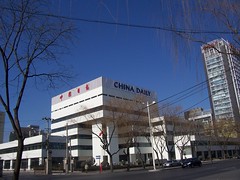
china dailyImage by doubleaf via Flickr

Late post, but this is the other side of the coin…

----------

05:55 AM Jun 17, 2009

BEIJING - China appeared to cave in to public pressure yesterday by announcing that computer users are not required to install Internet-filtering software - though it will still come with all PCs sold on the mainland.

When contacted, a Ministry of Industry and Information Technology official said that use of the Green Dam Youth Escort software is "not compulsory".

This apparent reversal by the government, which said the new software must be packaged with all computers sold in China beginning July 1, marked a small victory for a burgeoning anti-censorship movement in China.

The government says the software is aimed at blocking violence and pornography, but users who have tried it say it prevents access beyond those topics to discussions of homosexuality, images of comic book characters, mentions of the banned Falun Gong spiritual group and, according to Hong Kong media reports, images of pigs because the software confuses them with naked human flesh.

The official China Daily newspaper trumpeted the news on its front page, quoting an official as saying the government's role was "limited to having the software developed and providing it free''. AP

From TODAY, World – Wednesday, 17-Jun-2009; see the source article here.

Reblog this post [with Zemanta]