Even with my current job as a systems analyst, a software developer/programmer, I felt a need to document my learning, so I have something to always look back to, especially with my advancing age. But no, I'm not that old yet...
Showing posts with label Web search engine. Show all posts
Showing posts with label Web search engine. Show all posts
I thought, how can it be possible? if the servers are already in Hong Kong, how can it still be 'meddled with'?
Beats me. But with an international issue like this, it makes us step back to ask why. Why is China so keen to get Google block some search results? Is China wanting to keep a 'clean slate' facade to the world? Everybody already knows what happened. Is China trying to keep from its local citizens what really happened, or how those past events are seen from the eyes of those not living in China, not controlled by China?
Whatever, read the news article here, and do leave your comments. You are most welcome!
---------- Google has confirmed that the Chinese authorities have begun blocking certain terms from a local search engine, after the company said it would no longer censor results for those terms itself.
The Chinese government's Golden Shield, which uses Cisco routers to censor terms deemed inappropriate by the authorities, is filtering out sensitive search terms used on Google.co.hk, the search company told ZDNetUK on Tuesday.
"Certain terms seem to be being blocked by the firewall," said a Google spokesperson, referring to the 'Great Firewall of China', the popular nickname for Golden Shield.
The Chinese government has not made any comment on whether it is blocking search terms on Google.com.hk. However, it has reacted to Google's actions, saying on Tuesday that the company was "totally wrong" to stop censoring its Chinese language search results, according to Chinese government portal Xinhua.
I was looking up on the status of Google in China, and seems like the news is not that much. Anyway, this news article may already be a couple of weeks old, but some details may yet be unknown to some, if not many.
I would like to know what's your reaction to this world event. I say that it is a world event, as everybody is watching. Read on.
---------- A Chinese official has blasted Google for "violating its written promise", following the U.S. company's decision to move its search traffic to Hong Kong while leaving just its sales and research and development teams in China.
According to a China Daily news report filed Tuesday, the unnamed official from the Internet bureau under the country's State Council Information Office, said Google went back on its agreement to filter its search engine. His allegation was unleashed four hours after Google announced in a blog post its move to Hong Kong.
"Google has violated its written promise it made when entering the Chinese market, by stopping [the] filtering of its [search] service and blaming China in insinuation for alleged hacker attacks," the official said. "This is totally wrong. We're uncompromisingly opposed to the politicization of commercial issues, and express our discontent and indignation to Google for its unreasonable accusations and conducts."
According to one Chinese analyst, Google's stance smacks of "big power" gestures by Western countries harking back to the 19th century in attempts to prise the once-closed economy.
The unnamed commentator, who wrote in the Hong Kong-based Chinese newspaper Sing Tao Daily, noted that China's top leaders have themselves stressed the issue of opening the country up to the world. Google, however, is challenging the Chinese government's sovereignty by demanding it accepts Google's definition of "opening up", he said.
SANTA CLARA, Calif. - Microsoft Corp. CEO Steve Ballmer intends to keep the regulatory heat on Google as his company strives to lessen its rival's dominance of Internet search.
In an appearance Tuesday at a search engine conference, Ballmer said Microsoft believes Google Inc. has done things to gain an unfair advantage in the Internet's lucrative search advertising market. He didn't specify the alleged misconduct.
"We are expressing some of the issues and frustrations we see" with antitrust regulators, Ballmer said. "Sometimes (it's) unsolicited, sometimes because we have been asked."
Google declined to comment Tuesday. But it has said its actions are aimed at providing better experiences for Web surfers and advertisers.
Yahoo Inc., which is about to team up with Microsoft in search, seems less inclined to get regulators involved as the two companies gang up on Google.
"I am actually not interested in government intervention in anything," Yahoo CEO Carol Bartz told reporters during a Tuesday lunch to celebrate the company's 15th anniversary. "I think for the most part markets work. I don't wish antitrust on anyone."
Microsoft already has helped convince U.S. regulators that Google would break antitrust laws in two proposed deals: a search advertising partnership with Yahoo that was scrapped in 2008 and a digital books settlement that still needs federal court approval. Yahoo also lobbied regulators to oppose the agreement that would give Google the electronic rights to millions of hard-to-find books.
Ciao, an online shopping comparison service owned by Microsoft, has filed an antitrust complaint against Google in Europe. Regulators there say they are looking into those allegations and similar ones made by two other sites, Foundem and ejustice.fr.
Microsoft, the world's largest software maker, has had its own troubles with regulators. Its bundling of personal computer software triggered a court dispute with the U.S. Justice Department that forced the company to change the way it packages software with its Windows operating system. Microsoft later tussled with EU regulators, too.
Since Microsoft's own antitrust showdown started in the late 1990s, more people have been relying on their computers chiefly as a conduit to the Internet. The evolution has turned Google's Internet gateway and other online services into a major threat to Microsoft, which has tried to respond by investing billions of dollars in search technology.
Microsoft has made little headway. Even with some progress since unveiling an upgraded search engine called Bing nine months ago, Microsoft remains a distant third in the U.S. search market.
Ballmer is counting on Microsoft's 10-year search partnership with No. 2 Yahoo to help close the gap. Regulators cited Google's 65 percent share of the U.S. search market as one of the reasons for allowing Microsoft and Yahoo to work together.
When the alliance kicks in late this year, Microsoft will start processing search requests on Yahoo's Web site and pay most of the ad revenue to its new partner. As Microsoft fields more search requests, Ballmer expects the company to collect more data that it could analyze and use to help improve search results. That, in turn, could help the company lure away Google users.
"There is an advantage to having the power of two, as opposed to the power of one," Ballmer told the crowd at the Search Marketing Expo.
When asked whether he thought Microsoft would overtake Google in Internet search, Ballmer indicated it probably will be a long time before there's a changing of the guard.
"I don't know how old I will be when that will happen," said Ballmer, 53.
As part of its efforts to challenge Google, Microsoft has sought help from Twitter and Facebook two popular services for sharing information and photographs.
Microsoft, like Google and Yahoo, pays an undisclosed sum for better access to Twitter's index of short messages. In a bigger partnership, Microsoft spent $240 million for a 1.6 percent stake in Facebook and processes search requests on that site.
Responding to questions, Ballmer played down the possibility of Microsoft buying Twitter or Facebook, which are both privately held.
Shares of Microsoft, which is based in Redmond, Wash., fell 56 cents, or 1.9 percent, to close Tuesday at $28.46. Google, based in Mountain View, Calif., gained $8.37, or 1.6 percent, to $541.06, while Sunnyvale, Calif.-based Yahoo lost 6 cents to $15.73. - AP
From GMANews.tv; see the source artice here. ----------
SHANGHAI - Two prominent schools in China dispute allegations that hacking attacks on Google and other firms originated from them, Xinhua news agency reported.
The New York Times reported last Thursday that security investigators traced the hacking to computers at Shanghai Jiaotong University and Lanxiang Vocational School in China.
Xinhua cited an unnamed Jiaotong University spokesperson on Saturday as saying the allegation against it is baseless, and an official at the vocational school said its investigation found no evidence the attacks originated there.
Mr Li Zixiang, a Communist party official in the Lanxiang school in the eastern Shandong province, said students there are currently on their winter break.
He also disputed NYT's report that some evidence linked attacks to one computer science class taught by a Ukrainian.
"We have never employed any foreign staff," Mr Li was quoted as saying.
Mr Zhou Hui, director of the school's general office disputed the NYT's report that Lanxiang had close ties to the military. He told Xinhua that some students had joined the military after school, but it was natural for citizens to do so.
Google revealed Jan 12 that digital thieves had stolen some of its computer code and tried to break into the accounts of human rights activists opposed to China's policies.
The digital assault was so serious that Google has said it's prepared to shut down its China-based search engine and the company and the government are still discussing a possible compromise. AP
BEIJING — Google Inc. said Friday that it would step up efforts to stop pornography reaching users in China after a mainland watchdog found the search engine turned up a large number of links to obscene and vulgar sites.
"We have been continually working to deal with pornographic content, and material that is harmful to children, on the Web in China," a statement from the company said.
It added that it had renewed efforts to keep the Internet in China clean after noticing criticism posted Thursday to the Web site of the mainland watchdog, the China Internet Illegal Information Reporting Center.
The watchdog said that despite official warnings, Google was still failing to "filter pornographic contents from its search engine results according to China's relevant laws and regulations." It said tests found that the search engine provided links to a large number of lewd and vulgar pictures, videos and articles, though it gave no specific examples.
China, which has the world's largest population of Internet users at more than 298 million, also has one of the world's tightest controls over the Internet. The government bans online pornography and this year launched a nationwide crackdown that led to the closing of more than 1,900 Web sites.
Google, headquartered in Mountain View, California, has struggled to expand in China, where it says it has about 30 percent of the search market. China's homegrown Baidu search engine remains the most popular, with about 60 percent of the market. - AP
DETROIT - Microsoft chief Steve Ballmer on Wednesday downplayed expectations for the success of the newly launched Bing search engine, but said the company was committed to challenge Google over the long-term.
"When you're sitting there as we are in the search base, you've got eight percent share and there's a kind of a big dog competitor out there in the market place, you can do very big things," Ballmer said.
The initial response to Bing has been "very good" Ballmer said, but it will not displace Google anytime soon.
"I don't want to overset expectations. We're going to have to be tenacious and keep up the pace of innovation over a long period of time," Ballmer told an economic summit in Detroit, Michigan.
"We may be successful, we may not, but we can't be successful without being committed to changing things, changing the approach, changing the business model and you can't give up in six months, or a year or two years."
Microsoft said that Bing, unveiled at the end of May, is designed to intuitively understand what people are seeking on the Internet and challenge online king Google.
The US software colossus described Bing as a "Decision Engine" aimed at helping people make buying decisions, plan trips, research health matters or find local businesses.
Bing's launch came in the wake of Google and Yahoo! announcing refinements to their search services and the launch of a Wolfram Alpha query engine that delivers answers instead of lists of websites.
Bing replaces MSN Live Search, which has languished in a distant third place behind market-leading Google and second-place Yahoo!
Bing relies predominately on algorithms and key words to provide results for online searches but has infused some semantic technology that deduces intended meanings of phrases, according to Microsoft.
Ballmer declined to comment on what Bing's launch meant for Microsoft's attempt to acquire Yahoo!
Online tracking firm comScore said Wednesday that Microsoft saw its share of search result pages in the United States continue to climb during the second week of Bing's introduction.
Microsoft Sites' share of search result pages in the United States increased to 12.1 percent June 8 to 12, up three percentage points from the May 25 to 29 period prior to Bing's introduction, comScore said.
Microsoft's average daily penetration among US searchers also increased by three percentage points to 16.7 percent during the work week of June 8 to 12, comScore found.
ComScore on Wednesday also released US search engine rankings for May, before Bing's introduction.
Google grabbed 65 percent of the US search market for the month followed by Yahoo! with 20.1 percent and Microsoft with eight percent. - AFP/fa
SAN FRANCISCO – Internet video leader YouTube Inc.'s losses have been overblown by some analysts, but corporate parent Google Inc. doesn't mind the misperception, according to a study being released Wednesday.
Technology consultants at RampRate Inc. project YouTube's operating losses this year at $174.2 million — far below the $470.6 million estimated by Credit Suisse analysts Spencer Wang and Kenneth Sena in an April research report that became a hot topic on Wall Street and the Internet.
The dueling forecasts are the latest twist in a guessing game that has intrigued investors since Google bought YouTube for $1.76 billion in late 2006.
Although YouTube has become an even more popular diversion since the Google deal, it still hasn't proven it can make money.
Google has acknowledged YouTube isn't profitable, but has refused to provide any specifics, leaving it to outsiders to figure out.
And the number crunching usually leads to inaccurate conclusions, according to Google's chief financial officer, Patrick Pichette.
"Most people build outside views of what it costs us to do things, and often they exaggerate," Pichette said in an interview with the Canadian magazine Maclean's shortly after Credit Suisse released its YouTube report.
But Google has little incentive to set the record straight about YouTube's actual losses, according to RampRate, which specializes in managing technology costs.
RampRate reasons the perception of large losses at YouTube helps Google negotiate more favorable contracts with movie, TV and music studios licensing their video. What's more, copyright owners also are less likely to go to court in pursuit of unpaid royalties and damages if they believe YouTube is a big money loser, according to RampRate's thesis.
"Google is no doubt thrilled to let YouTube be known as a financial folly," RampRate's report said.
YouTube spokesman Aaron Zamost wouldn't comment directly on RampRate's report, but he stressed that Google has been running ads near or in millions of videos in an effort to curb YouTube's losses. He also said Google had little incentive to magnify its losses because YouTube shares revenue with its business partners.
"We want our partners to do well, because when they succeed, we succeed," Zamost said.
Although it has been cutting costs to cope with the US recession, Google can still afford to subsidize YouTube with the money it makes through its search engine. Google earned $4.2 billion last year and started this year with a first-quarter profit of $1.4 billion.
Analysts generally concur with Credit Suisse's $241 million estimate for YouTube's revenue this year. RampRate adopted Credit Suisse's revenue projections in its calculations, as well as Credit Suisse's estimate that YouTube will spend about $332 million on video acquisition, advertising commissions and general overhead this year.
The big mystery is how much it costs Google to store and distribute the 20 hours of video that are sent to YouTube every minute.
After conferring with industry experts, Wang and Sena concluded Google will spend nearly $380 million on Internet bandwith, computer hardware, software and data centers for YouTube. RampRate believes the figure is about $83 million.
That lower estimate presumes Google has negotiated moneysaving deals with broadband providers and other behind-the-scenes players that move data through the Internet. RampRate also believes Google's own propriety technology has helped hold down YouTube's costs, an idea that Pichette endorsed in his Maclean's interview.
"When people run models, they generally use standard industry pricing for bandwidth, storage, but we build everything from scratch," Pichette said at the time. "So we know our cost position but nobody else does."
Credit Suisse stands by its April estimates, said Sena, one of the analysts who wrote the April report. "We feel very comfortable with what we came up with," he said Tuesday. - AP
A new research report identifies the most dangerous Internet search words
Searches using "music lyrics" and "free" attract malicious software sites
Expert: "We've seen a dramatic increase in malware"
Dangerous topics include screen savers, free games and "work from home"
Searches for words such as "free," "music" and "download" put users at increased risk for malicious software.
HONG KONG, China (CNN) -- If you like to search for "music lyrics" or "free" things, you are engaging in risky cyber behavior. And "free music downloads" puts 20 percent of Web surfers in harm's way of malicious software, known as "malware."
A new research report by U.S.-based antivirus software company McAfee has identified the most dangerous Internet search words that place users on pages with a higher likelihood of cyber attacks.
The study examined 2,600 popular keywords on five major search engines -- Google, Yahoo, Live, AOL and Ask -- and analyzed 413,000 Web pages.
"Just in the past year, we've seen a pretty dramatic shift in what we call malware," David DeWalt, president and CEO of McAfee, told Richard Quest for CNN International's "Quest Means Business."
"It went from a hacker in a basement, to organized cybercrime to now, literally, terrorism and other forms of organized geopolitical attacks," he said.
Categories that had the highest risk of run-ins with malware: screen savers, free games, work from home, Olympics, videos, celebrities, music and news.
Riskiest terms: word unscrambler, lyrics, myspace, free music downloads, phelps, game cheats, printable fill-in puzzles, free ringtones and solitaire.
The study shows how cyber criminals are increasing in sophistication.
"We can have massive outages with a hacker in the basement. We saw that recently with the 'Twitter worm,' a 17-year-old in his basement basically perpetrated tens of millions of (computer) outages. Or, we can see an organized attack bringing down infrastructure," DeWalt said.
Antivirus software companies lag behind the latest developments by cyber criminals, he said.
"We've been way behind, that's true for the entire world, the global infrastructure of the Internet has grown dramatically -- 50 percent of the world's PCs are unprotected," DeWalt said.
Despite the increased risk, DeWalt doesn't believe there will be a "cyber Armageddon" causing widespread destruction of computers and Internet infrastructure.
"Last week, you saw President Obama in the United States talk about a major cyber-security initiative sponsored by the government, other governments are sponsoring this as well," DeWalt said. "I think we're learning this can happen, and if we get ahead of it, we can prevent it."
SAN FRANCISCO - Microsoft on Thursday unveiled a new search engine, Bing, designed to intuitively understand what people are searching for on the Internet and challenge online king Google.
The US software colossus refers to Bing as a "Decision Engine" and said it will begin deploying it online at bing.com in the coming days.
"Today, search engines do a decent job of helping people navigate the Web and find information, but they don't do a very good job of enabling people to use the information they find," said Microsoft chief executive Steve Ballmer.
"When we set out to build Bing, we grounded ourselves in a deep understanding of how people really want to use the Web."
Bing search employs semantic technology intended to help it recognize not just key words but what is intended by phrases typed in as online queries, according to Microsoft.
Bing is built to "go beyond today's search experience" by recognizing content and adapting to query types, according to the Redmond, Washington-based company.
Bing takes aim at Microsoft arch-rival Google, which dominates the online search market. Bing will replace MSN Live search, which has languished in a distant third place behind Google and Yahoo!.
THERE has been plenty of buzz online about Wolfram Alpha (www.wolframalpha.com), a unique online tool that tech pundits say could beat Google Search at its own game.
Unlike conventional search engines, Wolfram Alpha does not generate links to information from across the web to answer your search query. Instead, it tries to understand what you’ve asked and presents factual data from a database of curated content (currently only 10TB in size). Thanks to its algorithmic-rich backbone, Wolfram Alpha can present its results in tables, charts, diagrams and other visual means as an answer to your query. And there’s no guesswork needed to ascertain the data since it comes from valid sources.
Here’s what we found when we compared the results generated by Wolfram Alpha with other search engines.
Search: GDP of Singapore
>> Wolfram Alpha: In its results, Wolfram Alpha presented the 2007 estimate of our GDP (gross domestic product) and charted a useful graph of our country’s GDP growth overtime. It also displayed relevant information, like the country’s inflation and employment rates.
>> Google Search (www.google.com.sg): The first link on Google’s search results was a sponsored link by a bank — hardly useful. Next in line was a link to the website for the United State’s Central Intelligence Agency, which has Singapore’s 2007 GDP figures.
Search: Earthquakes in Indonesia
>> Wolfram Alpha: It displayed a graphic map littered with dots pinpointing the areas in Indonesia that are affected by earthquakes. The dots vary in sizes to illustrate the magnitude of the earthquake. With the aid of simple drop-down menus, you can filter the earthquakes by magnitude and by the period of time they occurred.
>> Yahoo (sg.search.yahoo.com): Related links to news stories from different media outlets formed the mainstay of Yahoo’s search results.
Search: Big Mac
>> Wolfram Alpha: It’s not localised yet, so Wolfram Alpha won’t recognise food items like rojak or nasi lemak. In fact, for a little surprise, see its response when you query this: “Do you speak Malay?” So, we fed McDonald’s almost universal Big Mac into Wolfram Alpha and were treated to a detailed list of the fast food’s nutritional values.
>> MicrosoftLive Search (search.live.com): Two Wikipedia entries on the Big Mac made the top of the list on the search engine’s results, with the link to the official UK website for McDonald’s appearing at number three on the result list.
Search: Singapore weather in May
>> Wolfram Alpha: Not only did Wolfram Alpha state the average temperature and range of conditions, humidity and wind speed, it also provided charts indicating cloud cover and temperature.
>> rednano.sg (www.rednano.sg): The local search engine churned out a list of largely irrelevant results. Under its web results tab, it displayed a link to news stories on Indonesia and China, followed by a blog listing “wild happenings in singapore” while under its news results page, it listed links to technology-related sites. Huh?
Wolfram Alpha won’t quite render search engines obsolete. Its strength lies in providing you ways to crunch factual data and manipulate it to your liking. Because it lacks information on pop culture or news, users who try to use it like a conventional search engine might be disappointed.
This “computational knowledge engine” can be daunting because it isn’t very flexible with processing certain phrases or queries. We sometimes had to rearrange our queries to get the right results.
However, Wolfram Alpha holds much potential and is a step in the right direction for a web tool that serves as an encyclopedia on steroids.
Microsoft might be unveiling a new search engine next week. According to the Wall Street Journal (WSJ), Microsoft plans to demonstrate the search engine, code-named Kumo, at D: All Things Digital, a conference organised by the WSJ. Said to be a revamp of Microsoft’s Live Search, Kumo aims to provide a better web search experience by shortening and grouping search results into relevant categories.
From TODAYOnline.com, Tech – Friday, 22-May-2009; see the source article here.
MILLIONS of web users have Google’s search engine as the homepage on their computer. It’s the first thing they see when they switch their machine on and their first port of call whenever they need to find the answer to a question.
Such is Google’s dominance of the search space that any attempt to launch a rival platform is often met with a mixture of bemusement and sympathy. The problem, as many companies quickly discover, is that it’s almost impossible to beat Google at its own game. Instead, what’s needed is a fresh approach to search which can supplement Google while also carving out its own niche.
That’s the strategy taken by Wolfram Alpha, a search engine that launches on Monday. It’s the brainchild of Stephen Wolfram, a British physicist and former child prodigy who, in 1988, created the Mathematica computer program used by scientists, researchers and engineers to number-crunch huge volumes of complex data.
Wolfram Alpha is designed to provide clear answers to specific questions. For instance, a Google search for, say, the nutritional values of a Big Mac returns 123,000 results, which web users then have to sift through to find the facts they want. A similar search on Wolfram Alpha will, in theory, return a single answer, detailing the calories, fat content and salt levels in the McDonald’s burger.
That’s because Wolfram Alpha doesn’t crawl the web for its answer, as Google does. Rather, it searches its own huge database of factual data to find the correct information.
“Fifty years ago, when computers were young, people assumed that they’d quickly be able to handle these kinds of things, and that one would be able to ask a computer any factual question and have it compute the answer,” says Dr Wolfram. “But it didn’t work out that way. Computers have been able to do many remarkable and unexpected things. But not that. I always thought, though, that eventually it should be possible. And a few years ago, I realised I was finally in a position to try to do it.”
Indeed, says Mr Conrad Wolfram, Stephen’s brother and the project’s strategic director, creating the database that underpins the search engine has been a “huge undertaking”.
“It has taken three to four years to generate this database,” he says. “But because we use Mathematica to help structure this information, you could say we’ve been working on it for even longer.”
The secret, says Conrad Wolfram, is in the value that’s been added to this data. “We believe in human expertise, which is very different to traditional search - that relies much more on computer science to pick out results,” he says. “The database is a structured environment in which we’ve added meaning and computational knowledge to the data. This allows it to come up with an answer to the question a user asks.”
Much of the hype and speculation surrounding the launch of Wolfram Alpha has framed the website as a potential “Google killer”. But Wolfram Alpha is designed to be “highly complementary” to other search engines rather than a direct competitor, says Conrad.
“If you use a search engine, it’s a bit like a librarian who gives you a whole set of papers that you need to look through to get the answer. If you use Wolfram Alpha, it’s more like having your own personal analyst who takes the question you’ve got and tries to come back with a specific set of answers unique to your question.”
Wolfram Alpha, he says, will grow in accuracy and scope as more people use it. He says that experts will analyse aggregated, anonymised data about searches performed and the success rate of results, to learn how people are using the search tool and find ways of improving the service.
Drawing relationships between complex data has long been a holy grail for web developers. For years, companies have been working on building a so-called “semantic web”, in which data contained within webpages is labelled with keywords, or digital “tags”, to associate meanings to information and enable it to be interpreted in a wider context.
But that’s a difficult idea to implement. “It’s hard to get people to tag their data in this way, and no consensus has been reached on what tags to use, says Wolfram. “Our approach is different - to suck the data in so that we can structure it, curate it, tag it with meaning and make it computable.”
It is here that Wolfram Alpha could really make a name for itself, becoming a “destination website” for students and researchers seeking an easy way to distil complex information into manageable chunks, which can then act as a springboard for further research and discovery.
Even Google, the old master of web search, has seen the potential of this, launching a tool called Google Squared that allows users to type in a specific query - such as London boroughs, or United States Presidents - and receive a list of information that relates to that search term. For example, the list of London boroughs aims to list all boroughs alphabetically, along with links to relevant websites and information about population and the leader of the council. The results are presented in a grid, and users can remove columns of unwanted information or add a column of data they would prefer to see.
Wolfram Alpha, it seems, is ruffling a few feathers. “We’re at the start of a very long project,” says Conrad Wolfram. “We’re not going to have everything right to start with, but I think people will find Wolfram Alpha a very powerful system, and it’s going to get a lot more powerful still. Many new things will come over the months ahead.” THE DAILY TELEGRAPH
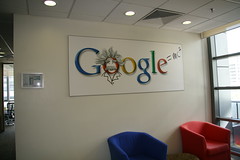
 Image by imjustcreative via Flickr


![Reblog this post [with Zemanta]](http://img.zemanta.com/reblog_e.png?x-id=6c0c276b-3177-4213-b1f9-91b8b8b7e976)
![Reblog this post [with Zemanta]](http://img.zemanta.com/reblog_e.png?x-id=123e47d4-b128-4da2-baf5-79f428a8ad30)
![Reblog this post [with Zemanta]](http://img.zemanta.com/reblog_e.png?x-id=5cf6e55c-cc7e-4b92-98f6-353ea70f26a8)

![Reblog this post [with Zemanta]](http://img.zemanta.com/reblog_e.png?x-id=ea15be6c-eefc-4d0b-b8dd-87ac7d538c07)

![Reblog this post [with Zemanta]](http://img.zemanta.com/reblog_e.png?x-id=604665b9-87a2-4acc-bcb8-0d9897dd5fbe)

![Reblog this post [with Zemanta]](http://img.zemanta.com/reblog_e.png?x-id=436a08a8-8fe8-49f3-ac1b-5e2af415ce33)

![Reblog this post [with Zemanta]](http://img.zemanta.com/reblog_e.png?x-id=b39b933f-8550-453c-bb0a-cf4d7436edc7)

![Reblog this post [with Zemanta]](http://img.zemanta.com/reblog_e.png?x-id=18447676-f9ea-44db-9838-a84cfe86485f)

![Reblog this post [with Zemanta]](http://img.zemanta.com/reblog_e.png?x-id=66a94b36-096d-4614-a41b-8ffc1682734d)

![Reblog this post [with Zemanta]](http://img.zemanta.com/reblog_e.png?x-id=fbf307fc-e2b0-4f2b-91af-a63dfb1c1940)

![Reblog this post [with Zemanta]](http://img.zemanta.com/reblog_e.png?x-id=70c60853-52d8-4ee7-9ef1-854147e57715)