Showing posts with label Hong Kong. Show all posts

08 April, 2010

China blocking some Google search results

Google Inc.Image via Wikipedia
I thought, how can it be possible? if the servers are already in Hong Kong, how can it still be 'meddled with'?

Beats me. But with an international issue like this, it makes us step back to ask why. Why is China so keen to get Google block some search results? Is China wanting to keep a 'clean slate' facade to the world? Everybody already knows what happened. Is China trying to keep from its local citizens what really happened, or how those past events are seen from the eyes of those not living in China, not controlled by China?

Whatever, read the news article here, and do leave your comments. You are most welcome!

----------
Google has confirmed that the Chinese authorities have begun blocking certain terms from a local search engine, after the company said it would no longer censor results for those terms itself.

The Chinese government's Golden Shield, which uses Cisco routers to censor terms deemed inappropriate by the authorities, is filtering out sensitive search terms used on Google.co.hk, the search company told ZDNet UK on Tuesday.

Read Special Report: Google, China showdown

"Certain terms seem to be being blocked by the firewall," said a Google spokesperson, referring to the 'Great Firewall of China', the popular nickname for Golden Shield.

The Chinese government has not made any comment on whether it is blocking search terms on Google.com.hk. However, it has reacted to Google's actions, saying on Tuesday that the company was "totally wrong" to stop censoring its Chinese language search results, according to Chinese government portal Xinhua.


Source article is here.
----------

Reblog this post [with Zemanta]

Chinese official blasts Google

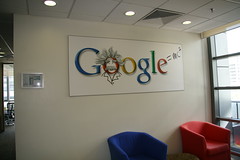
Google China OfficeImage by bfishadow via Flickr
I was looking up on the status of Google in China, and seems like the news is not that much. Anyway, this news article may already be a couple of weeks old, but some details may yet be unknown to some, if not many.

I would like to know what's your reaction to this world event. I say that it is a world event, as everybody is watching. Read on.

----------
A Chinese official has blasted Google for "violating its written promise", following the U.S. company's decision to move its search traffic to Hong Kong while leaving just its sales and research and development teams in China.

According to a China Daily news report filed Tuesday, the unnamed official from the Internet bureau under the country's State Council Information Office, said Google went back on its agreement to filter its search engine. His allegation was unleashed four hours after Google announced in a blog post its move to Hong Kong.

"Google has violated its written promise it made when entering the Chinese market, by stopping [the] filtering of its [search] service and blaming China in insinuation for alleged hacker attacks," the official said. "This is totally wrong. We're uncompromisingly opposed to the politicization of commercial issues, and express our discontent and indignation to Google for its unreasonable accusations and conducts."

According to one Chinese analyst, Google's stance smacks of "big power" gestures by Western countries harking back to the 19th century in attempts to prise the once-closed economy.

The unnamed commentator, who wrote in the Hong Kong-based Chinese newspaper Sing Tao Daily, noted that China's top leaders have themselves stressed the issue of opening the country up to the world. Google, however, is challenging the Chinese government's sovereignty by demanding it accepts Google's definition of "opening up", he said.

Source article is here.
----------
What's on your mind? Do leave your comments.


Reblog this post [with Zemanta]

24 March, 2010

Google stops China censorship...

Google China's logoImage via Wikipedia

Google stops China censorship, Beijing condemns move
Posted: 23 March 2010 1508 hrs


WASHINGTON - A day after Google said it would no longer censor its search engine results in China, angering Beijing, Chinese access to websites covering sensitive topics remained blocked Tuesday.

Google announced Monday in a blog post that it had shifted mainland Chinese users of its Google.cn search engine to an uncensored site in the former British colony Hong Kong, drawing anger from Beijing and raising questions about the Web giant's future in the world's biggest online market.

But Tuesday, searches from mainland computers of subjects like "Falun Gong" and "June 4" -- referring to the Tiananmen pro-democracy protests in 1989 -- produced the message: "Internet Explorer cannot display the web page."

-----

A stand builder fixes a Google logo at an exhibition booth

-----

The same searches on Google.com.hk from computers in Hong Kong displayed full results -- suggesting that China was deploying its "Great Firewall" of web censorship.

While ending censorship in China, the Mountain View, California-based Google said it planned to keep sales, research and development teams in the country of some 384 million Internet users.

Google's decision came a little more than two months after the Internet titan threatened to close its Chinese operations because of censorship and cyberattacks it said originated from China.

China said Google was "totally wrong" to stop censorship and blame Beijing for the cyberattacks that allegedly targeted the email accounts of Chinese human rights activists.

"Google has violated its written promise it made when entering the Chinese market by stopping filtering its searching service," said the official in charge of the Internet bureau of the State Council Information Office.

"We're uncompromisingly opposed to the politicization of commercial issues, and express our discontent and indignation to Google for its unreasonable accusations and conduct."

The White House said it was "disappointed" Google could not reach a deal with Beijing and reiterated that US President Barack Obama is "committed to Internet freedom and... opposed to censorship."

Drummond, Google's top lawyer, said "figuring out how to make good on our promise to stop censoring search on Google.cn has been hard.

"We very much hope that the Chinese government respects our decision, though we are well aware that it could at any time block access to our services."

Google co-founder Sergey Brin told The New York Times that shifting the Chinese service to Hong Kong was not given a clear-cut stamp of approval by Beijing but "there was a sense that Hong Kong was the right step."

"There's a lot of lack of clarity," he said. "Our hope is that the newly begun Hong Kong service will continue to be available in mainland China."

Drummond said "the Chinese government has been crystal clear throughout our discussions that self-censorship is a non-negotiable legal requirement."

He said providing uncensored search from Hong Kong is "entirely legal and will meaningfully increase access to information for people in China."

Beijing tightly controls online content, removing information it deems harmful such as pornography and violent content, but also politically sensitive material.

Google launched Google.cn in January 2006 after agreeing to censor websites for content banned under Chinese law. Google.cn is the second-largest search engine in China after Chinese search engine Baidu.com.

Google's decision to end censorship in China was welcomed by human rights and technology groups and US lawmakers.

"It is a remarkable, and welcomed, action and an important boost of encouragement for millions of Chinese human rights activists and political and religious dissidents," said US Representative Christopher Smith, a Republican
from New Jersey.

Arvind Ganesan, business and human rights director at Human Rights Watch, called it "an important step to challenge the Chinese government's use of censorship to maintain its control over its citizens."

"Google has taken a courageous position against censorship," said Lucie Morillon of Paris-based media rights group Reporters Without Borders.

Leading Chinese dissident Wei Jingsheng, who spent nearly two decades in prison and now lives in the United States, said he knew China "would not back down."

"But we also knew that Google's motto was 'Don't be evil.' So there was no point on which to compromise," Wei said.

Leslie Harris, president of the Center for Democracy & Technology, praised what she called Google's "continued effort to enable China's people with unfiltered access to robust sources of information from all over the world."

- AFP/ir

From ChannelNewsAsia.com; see the source article here.

----------


Reblog this post [with Zemanta]

China nixes Google censorship move

National emblem of the People's Republic of ChinaImage via Wikipedia

China says Google "totally wrong" to stop web censorship
Posted: 23 March 2010 0655 hrs


BEIJING - China said Tuesday Google had "violated its written promise" and is "totally wrong" to stop censoring its Chinese language search engine and to blame Beijing for alleged hacker attacks.

The comments came from an official in charge of the Internet bureau of the State Council Information Office, according to the state-run Xinhua news agency.

"Google has violated its written promise it made when entering the Chinese market by stopping filtering its searching service and blaming China in insinuation for alleged hacker attacks," said the official.

"This is totally wrong. We're uncompromisingly opposed to the politicisation of commercial issues, and express our discontent and indignation to Google for its unreasonable accusations and conducts," the official added.

Hours earlier Google said it had ended censorship of its Chinese-language search engine Google.cn and was redirecting mainland Chinese users to an uncensored site in Hong Kong.

-----

Google China office in Beijing

-----

Google also said it intended to continue research and development work in China and to maintain a sales presence there.

Google's lifting of censorship on Google.cn comes a little more than two months after the Mountain View, California-based company said it had been the victim of cyberattacks originating from China.

The White House said it was disappointed that Google could not reach a deal with Beijing.

"We are disappointed that Google and the Chinese government were unable to reach an agreement that would allow Google to continue operating its search services in China on its Google.cn website," National Security Council spokesman Mike Hammer said in a statement.

- AFP /ls

From ChannelNewsAsia.com; see the source article here.

----------


Reblog this post [with Zemanta]

24 June, 2009

China says unpopular filtering software optional

china dailyImage by doubleaf via Flickr

Late post, but this is the other side of the coin…

----------

05:55 AM Jun 17, 2009

BEIJING - China appeared to cave in to public pressure yesterday by announcing that computer users are not required to install Internet-filtering software - though it will still come with all PCs sold on the mainland.

When contacted, a Ministry of Industry and Information Technology official said that use of the Green Dam Youth Escort software is "not compulsory".

This apparent reversal by the government, which said the new software must be packaged with all computers sold in China beginning July 1, marked a small victory for a burgeoning anti-censorship movement in China.

The government says the software is aimed at blocking violence and pornography, but users who have tried it say it prevents access beyond those topics to discussions of homosexuality, images of comic book characters, mentions of the banned Falun Gong spiritual group and, according to Hong Kong media reports, images of pigs because the software confuses them with naked human flesh.

The official China Daily newspaper trumpeted the news on its front page, quoting an official as saying the government's role was "limited to having the software developed and providing it free''. AP

From TODAY, World – Wednesday, 17-Jun-2009; see the source article here.

Reblog this post [with Zemanta]

12 June, 2009

What are the most dangerous search terms on the Internet?

June 10, 2009 -- Updated 1039 GMT (1839 HKT)

Story Highlights

  • A new research report identifies the most dangerous Internet search words
  • Searches using "music lyrics" and "free" attract malicious software sites
  • Expert: "We've seen a dramatic increase in malware"
  • Dangerous topics include screen savers, free games and "work from home"

Searches for words such as "free," "music" and "download" put users at increased risk for malicious software.

HONG KONG, China (CNN) -- If you like to search for "music lyrics" or "free" things, you are engaging in risky cyber behavior. And "free music downloads" puts 20 percent of Web surfers in harm's way of malicious software, known as "malware."

A new research report by U.S.-based antivirus software company McAfee has identified the most dangerous Internet search words that place users on pages with a higher likelihood of cyber attacks.

The study examined 2,600 popular keywords on five major search engines -- Google, Yahoo, Live, AOL and Ask -- and analyzed 413,000 Web pages.

"Just in the past year, we've seen a pretty dramatic shift in what we call malware," David DeWalt, president and CEO of McAfee, told Richard Quest for CNN International's "Quest Means Business."

"It went from a hacker in a basement, to organized cybercrime to now, literally, terrorism and other forms of organized geopolitical attacks," he said.

Categories that had the highest risk of run-ins with malware: screen savers, free games, work from home, Olympics, videos, celebrities, music and news.

Riskiest terms: word unscrambler, lyrics, myspace, free music downloads, phelps, game cheats, printable fill-in puzzles, free ringtones and solitaire.

The study shows how cyber criminals are increasing in sophistication.

"We can have massive outages with a hacker in the basement. We saw that recently with the 'Twitter worm,' a 17-year-old in his basement basically perpetrated tens of millions of (computer) outages. Or, we can see an organized attack bringing down infrastructure," DeWalt said.

Antivirus software companies lag behind the latest developments by cyber criminals, he said.

"We've been way behind, that's true for the entire world, the global infrastructure of the Internet has grown dramatically -- 50 percent of the world's PCs are unprotected," DeWalt said.

Despite the increased risk, DeWalt doesn't believe there will be a "cyber Armageddon" causing widespread destruction of computers and Internet infrastructure.

"Last week, you saw President Obama in the United States talk about a major cyber-security initiative sponsored by the government, other governments are sponsoring this as well," DeWalt said. "I think we're learning this can happen, and if we get ahead of it, we can prevent it."

From CNN.com; see the source article here.


Reblog this post [with Zemanta]

04 June, 2009

Singapore leads the pack in music downloads

By Christopher Toh, TODAY

Posted: 04 June 2009 1157 hrs

Nokia 5800 Xpress Music

SINGAPORE: When it comes to music, Singaporeans have the edge over listeners in the United Kingdom and Australia, mobile phone company Nokia said yesterday.

According to Elizabeth Schimel, Nokia's global head of music services, Singapore has been one of the best performing markets, if not the leading market, for Nokia's Comes With Music brand, with more than three million downloads in the service's first two months here.

"We've passed the 3-million mark in terms of number of tracks downloaded," said Schimel. "We think this type of volume will have a profound impact on the market. And this comes with only being on the market for a couple of months."

Singapore was the second country in the world to launch Comes With Music. Eight markets were launched within the first five months of this year.

"We had a really strong marketing campaign and lots of word of mouth. Seeing people exploring a lot more music, opening up consumption beyond just the few hottest tracks, that's exciting," Schimel told Today at the music business conference Music Matters 2009 in Hong Kong.

Come With Music is a programme that allows users to use a Nokia device to download millions of songs from a wide range of artistes.

Meanwhile, Nokia is set to launch their latest Comes With Music phone, the N97, featuring a touch screen and qwerty keypad, this month.

- TODAY/yb

From ChannelNewsAsia.com; see the source article here.


Reblog this post [with Zemanta]