Showing posts with label Mobile phone. Show all posts

20 February, 2012

Android Launchers

Android MarketImage via WikipediaNew Homescreen Transition on LauncherPro for A...New Homescreen Transition on LauncherPro for Android Phones and Tablets (Photo credit: DanieVDM)LauncherProLauncherPro (Photo credit: Johan Larsson)English: Google Nexus S - Samsung Android PhoneImage via WikipediaLauncherPro home screenLauncherPro home screen (Photo credit: markuz)20-Feb-2012
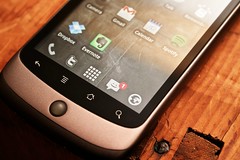

There are so many launchers available
in the Android Market, and there is no ‘perfect’ candidate that satisfies each and every user’s whims and wants. One would be graphically-enhanced, another functionally-boosted, and the rest are just midway deliveries, half of the functionalities, and half of the graphics.

I was thinking, why not I take the strength of each piece, and put them all in one launcher, and put it up in the Market? Wouldn’t that be the ‘final thing’ for an android phone launcher?

Definitely not. You see, our individuality is proof that we have our own preferences, and the disagreements, rather than the compatibilities, would be the major focus. What’s best for me only applies to me, and may not be true to others. We like what we like, and we don’t need to explain that.

Having said, I would just be putting up my own observation and judgment on the launchers that I have evaluated.


ADWLauncher/ADWLauncher EX


Customizable, and easy to use. I’m okay with this, but the only problem that I find, comparing with the rest, is the home dock, which only allows 2 apps other than the Home/Apps switch. Or maybe I just didn’t know how to do it… Hey, there’s no manual, as in all the rest. But that the acceptability of an app is that even without a manual, the average user (where I belong) should be able to navigate and tweak to one’s liking in the minimum time spent. Just like our old friend iPhone… still there?

There, I recommend ADWLauncher EX for those who are looking for an alternative to the phone’s stock launcher.


Regina 3D Launcher


Didn’t have much time to play with this launcher, and even just its icon is already turning me off. And why not? Every other app in the Market, even the very simple ones, are in full color, so what were they thinking when they created the drab and colorless icon? Simplicity? That would kill the cat!

One thing that could be nice is that they don’t have a grid snap. I find that very, very flexible. When adding an app to your home screen, you can position it anywhere you like within the screen bounds. I didn’t see that anywhere else.

I can’t say much anymore, so I am leaving the decision to the user whether or not to try Regina 3D Launcher.


LauncherPro


Almost within the graphics and performance level of ADWLauncher EX is LauncherPro. The home dock is easily populated with apps of your choosing. And pressing or hitting the Home button spreads out the panels on your screen, where you choose where you want to go – that I find most desirable – since you don’t need to flick and flick and flick, and turn and turn and turn the panels left and right.

Did I like LauncherPro? You bet I did. I used it for as long as I can, customized it as much as I wanted.

But all good things have to come to an end, but I highly recommend LauncherPro, as I would ADWLauncher EX.


SlideScreen


This isn’t really a launcher, but an app to show what you would want to see all in one screen. But that immediately puts up a question, ‘How many?’, since there are many things that we’d want to see, on the average 20 items (basing on my own use of the android phone), any time.

This is yours to try, all at your own risk (Okay, the risk is only losing some time, in exchange to learning something…)


GO Launcher EX


I like this launcher the second best! With so many themes to choose from, and many of them free, with some of the free items coming so close to the paid ones, this is a very, very good choice. Home dock isn’t an issue: you put in as much as you would need; there’s always a limit to what we can do, but this allows as much as I wanted.

In the apps list, I like the horizontal movement, since I would usually read left to right, or right to left; some launchers give you the vertical movement, and well, they have their own reward (and problems)!

You can even adjust the grid size to your liking: 4x4, 4x5, 5x4, 5x5, etc.

What’s more, GO array of apps is a vast array, and there just an app for each and every thing you may be needing and using: GO Dialer, GO SMS, GO Notification, GO TaskManager, Go, Go, Go!

I may just try it again sometime again (I just saw the Greenscree Theme), and I think I like it.

Highly recommended: Go Launcher EX!


GO Locker EX


I’m not a bird or a reptile, but boy, I was attracted to the 3D Worm Locker, and for this to work properly, you have to set the GO Locker as the home launcher. Works almost seamlessly with you phone, as if you are operating GO Launcher, but I got tired of the worm thing.

If you like it, this is okay. At least better than many of those out there that call themselves home launchers. They don’t even come close!


MXHome Launcher


What do I say about this launcher?

Uninstalled as soon as installed…


SPB Shell 3D


This is what I am using now. Heavy on the graphics, and the only thing that I don’t like, topping the list, is the scroll movement of the apps list: vertical. I would exchange this with Go Launcher EX, if not for the superb graphics. The others that I don’t like, well, maybe somebody else would find them useful, the extra panels of whatever.

This is resource hungry, but I have characterized my Samsung Galaxy R’s behavior, with its internal 8GB SD card.

Don’t go beyond 75% of what you have, and this launcher is performing best. All the others, you can use up to about 100MB more than 75% of capacity, before your phone starts its self-reset cycle.

So for me, that was 3GB usage of my 4GB partition, and 50% of the rest (1GB/2GB for the SD and Phone Only partitions). I would have to actually review all the apps that I have installed when the box of many-colored candy was opened up to me, pick those that I don’t use, and uninstall them. I got to free up more than 1GB afterwards – good for the launcher!


Home Manager


Home Manager app comes with Home Switcher, and that made it easy, if not easier, for me, to switch between the home launchers. No need to ‘clear the defaults’ by going to the apps’ setting, etc., etc.

You’d be better off trying out the launchers with this apps as you primary aid.


Other launchers that I haven’t tried:

Gingerbread Launcher
Ks Launcher
Launcher 7
Zeam
Balancer
Nemus Launcher
QuickDesk
HeLauncher
PandaHome
Open Home
Crazy Home Pro
MIUI ROM


Out there, what will you find?

If you will, you can Google ‘best android launchers’ and you would find many, even those that tell you the strengths and weaknesses of the apps, but then again, we all look at one picture with different eyes, and with different perception.

I ask then, when will we ever unite?

Enhanced by Zemanta

01 February, 2012

Some issues I encountered with my Android Phone

English: see filename. Taken with Canon EOS 50...Image via Wikipedia01-Feb-2012

After rooting my Samsung Galaxy R phone, and my daughters' SE Neo V and LG Optimus SOL phones, I played a lot with my SGR, installing, evaluating and uninstalling all those free and not-so-free apps from the Android Market, and from the Android Black Market, if there is any color to it, and after many days, and still not tired myself, the phone seem to have been caught in some cycle of self-reset.

I cannot use it anymore, and I have to take out the battery just to stop it from its endless, useless, cycle.

I read through the forums, and I came across some articles saying that it can be due to Dolphin Browser HD, which, incidentally, I have just installed.

I uninstalled it without hesitation, and it worked. Or so I thought.

Half a day passed, and the excruciating self-reset cycle resumed.

So what now?

I decided to remove SPB Shell 3D, or what's left of it after I switched and tried LauncherPro, ADWLauncher EX and GO launcher EX, and not without a reason: it seems slow to 'rebuild' the pages, or the panels, after going to home screen, coming from some applications or screens.

And I thought that also fixed the problem. But it didn't help. SPB Shell 3D isn't the culprit, and to my relief, because I like SPB's products, then in Windows Mobile, and now, in Android phones.

What could really be the problem?

Not really knowing what the problem is, I went to desperate modes, and when I searched on self-reset problem for the android phone, I came across the many others who lament the same sad story, their own, and what was the last resort? factory reset.

And with a rooted phone, that recourse is STRONGLY NOT RECOMMENDED.

So the problem was aggravated, knowing that something could probably help, but at the same time, that step cannot be taken. And no, I didn't force the issue, I didn't do factory reset.

I calmed down a bit, and I observed the phone, and I was able to catch the error msg being thrown out before the screen blacks out, and it has something to do with Activity Android System being non-responsive, and what's more, it is when the phone is completing the indexing of the SD card.

The process error, and the media card scanning process, finally  brought me to some other forums, who not surprisingly, are also swamped with many users and android phone owners who experience the same: issue with the SD card media scanning process, which is just when the phone executes its self-reset.

What was the thing being observed? moving the apps from the phone to the SD card, or having some corrupted media files (video, mp3, etc).

I didn't have problems with my media files, but I have been, like a child freed into a mysterious playground, installing and installing and installing apps, one after the other, as much as my phone memory and external card can take... or so I thought.

So with each brief moment that my phone stays alive, first, I uninstall those that I believe were installed simply by impetus, not need. Then, I moved many apps from the SD card, back to the phone.

After moving about 15 apps, the phone showed some stability, and a longer 'up' time. Then some 10 more, and the phone has snapped out of its self-reset limbo.

I continued to move more of the apps back to phone, until finally, the free space was about equal, both for the phone and the SD card. And it's not even the external SD card we are talking about. It's the phone internal SD card.

Summary:

  1. Android Phone entered into self-reset cycle; have to remove battery to turn off.
  2. Uninstalled Dolphin Browser HD; momentarily gave relief, but self-reset resumed.
  3. Uninstalled SPB Shell 3D, but problem still persisted.
  4. Uninstalled other 'unwanted' apps, many apps.
  5. Finally, moved remaining apps from (internal) SD card to phone.
  6. This is what solved the problem.
So what's the message? Moderation. Actually, it is a kind of caveat, and a caveat emptor, this Android Phone. But I still choose it over the iPHone.

Till then!
Enhanced by Zemanta

23 November, 2011

Mobile phone, cancer "no link"

Is this to say 'finally'?!
-----

Posted: 21 October 2011


Mobile phone users
PARIS: The largest study of its kind found no link between long-term use of mobile phones and increased risk of brain tumours, the British Medical Journal (BMJ) reported on Friday.

Danish researchers found no evidence of enhanced risk among more than 350,000 mobile-phone subscribers whose health was monitored over 18 years.

Earlier research on the possible link between cell phone use and cancerous tumours has been inconclusive, partly due to lack of long-term data.

In June, the World Health Organisation's International Agency for Research on Cancer (IARC) classified the radio-frequency electromagnetic fields emitted by mobile phones as "possibly carcinogenic to humans."

The new study follows up an earlier investigation that compared the cancer risk faced by all mobile phone subscribers in Denmark -- some 420,000 people -- with the rest of the adult population.

Patrizia Frei, a postdoctoral research fellow at the Danish Cancer Society, and colleagues examined health records from 1990 to 2007 for 358,403 cell phone subscribers.

Overall, 10,729 tumours of the central nervous system were diagnosed.

But among people with the longest mobile phone use -- 13 years or more -- cancer rates were nearly the same as for non-subscribers.

"The extended follow-up allowed us to investigate effects in people who had used mobile phones for 10 years or more, and this long-term use was not associated with higher risks of cancer," the study concluded.

The findings, however, could not rule out the possibility of a "small to moderate increase in risk" for very heavy users, or people who have used cell phones for longer than 15 years.

"Further studies with large study populations where the potential for misclassification of exposure and selection bias is minimised are warranted," the researchers said.

In a commentary, Anders Ahlbom and Maria Feychting from Sweden's Karolinska Institute said the new evidence was reassuring but called for continued monitoring of health registers.

There are about five billion mobile phones registered in the world, a figure that continues to rise sharply along with the average amount of time spent using them.

The IARC does not issue formal recommendations, but its experts pointed in June to a number of ways consumers can reduce possible risk.

Texting and using hands-free sets for voice calls lower exposure to potentially harmful radiation, compared to device-to-ear voice calls, by at least 10-fold, they said.

- AFP/wk


-----
Taken from ChannelNewsAsia.com; source article is below:

Mobile phone, cancer "no link"

Enhanced by Zemanta

18 October, 2011

FCC Test to Measure Cellphone Radiation Flawed, Group Says

Pictogram: use of cellphones is prohibitedImage via Wikipedia(WASHINGTON) -- A government test used to measure the radiation people absorb from their cellphones might underestimate the levels to which most adults and children are exposed, according to a group of doctors and researchers whose stated mission is to promote awareness of environmental health risks they believe may be linked to cancer.

Researchers from the Environmental Health Trust released a report Monday morning noting that the Federal Communications Commission test to determine radiation exposure is flawed.

The reason for the discrepancy, the group says, is that the process to determine radiation exposure from cellphones involves the use of a mannequin model that they say approximates a 6-foot-2, 220-pound person. Because the model represents only about three percent of the population, the authors report, the test will not accurately predict the radiation exposure of the other 97 percent of the population, including children. The group is pushing for a new testing system to measure radiation exposure in a wider range of consumers.

"The standard for cellphones has been developed based on old science and old models and old assumptions about how we use cellphones, and that's why they need to change," said Dr. Devra Davis, former senior adviser in the Department of Health and Human Services under the Clinton administration and one of the report's authors.

A different study cited in the report says a child's bone marrow absorbs 10 times the radiation as an adult. The authors also raise questions about long-term side effects, such as infertility in males who carry phones in their pockets, an exposure unaccounted for in the traditional certification process.

The authors suggest an alternative certification process, one that uses MRI scans to test real humans, including children and pregnant women. Such an approach would provide exposure data on a "Virtual Family," representing all ages, the authors say.

The U.S. government has had no specific comment on the report. The cellphone industry group CTIA-The Wireless Association said that because members "are not scientists or researchers on this topic," the news media should contact experts instead.

But whether the low level of radiation from cellphones actually causes cancer is a question that has yet to be answered. "No scientific evidence currently establishes a definite link between [cellphones] and cancer or other illnesses," the FCC says on its website.

Copyright 2011 ABC News Radio


Taken from WTMA.com; source article is below:
FCC Test to Measure Cellphone Radiation Flawed, Group Says

Enhanced by Zemanta

10 March, 2011

Our gadgets and their before-bed bad effects

Salem3Image by rabbit57i via FlickrGot this article from CNet news. It is about the negative impact of our gadget-using, especially before going to bed.

Read on.
-----
March 7, 2011

If you're having trouble getting a solid night's sleep, the blame may rest on all the gadgets you're using.

A whopping 95 percent of Americans use some kind of technology an hour before they go to sleep, the National Sleep Foundation found in a poll released today. The organization said Americans are turning on their televisions, mobile phones, computers, or video game devices before bed "at least a few nights a week."

The problem: using technology before bed can negatively affect a person's ability to fall asleep and to get the amount of sleep they need.

"Artificial light exposure between dusk and the time we go to bed at night suppresses release of the sleep-promoting hormone melatonin, enhances alertness and shifts circadian rhythms to a later hour--making it more difficult to fall asleep," Dr. Charles Czeisler, a professor at Harvard Medical School, said in a statement. "This study reveals that light-emitting screens are in heavy use within the pivotal hour before sleep."

When it comes to television before bed, age is a distinguishing factor. The National Sleep Foundation said that 67 percent of baby boomers watch TV every night or nearly every night an hour before they try to sleep, while 63 percent of Generation X folks do the same. Half of all people between the ages of 13 and 18, also known as Generation Z, watch television every night, while 49 percent of Generation Y--folks between 19 and 29--say they flick on their set.

With other devices, however, Generation Y and Generation Z lead the way.

The National Sleep Foundation found that 61 percent of Americans use a laptop or computer an hour before they go to bed. Generation Z and Generation Y were most likely to engage in that activity with 55 percent and 47 percent of people in those groups saying they use a computer before bed, respectively. Generation Z and Generation Y members are nearly twice as likely as baby boomers to play a video game an hour before trying to go to sleep, the organization said.

The National Sleep Foundation also examined mobile-phone use before bed. And not surprisingly, 56 percent of Generation Z users and 42 percent of Generation Y respondents send or receive text messages an hour before going to sleep. Just 15 percent of Generation X and 5 percent of baby boomers do the same.

Use of technology prior to bed can affect more than just sleep, researchers say.

Lauren Hale, an assistant professor at Stony Brook University Medical Center, said that the "higher use of these potentially more sleep-disruptive technologies among younger generations may have serious consequences for physical health, cognitive development and other measures of well being."

Hale's comments follow a study released in The Journal of Clinical Endocrinology & Metabolism in January that found light at night can cause high blood pressure and diabetes. Even more disconcerting, a study released last year by the University of Haifa found that light at night can increase cancer risks, as well.

"Exposure to LAN (light at night) disrupts our biological clock and affects the cyclical rhythm that has developed over hundreds of millions of evolutionary years that were devoid of LAN," researchers at the University of Haifa said at the time. "Light pollution as an environmental problem is gaining awareness around the world, and the World Health Organization...has already classified working the night shift as a higher grade of cancer risk."


Taken from below article:
All that tech is hurting your sleep, researchers say


Enhanced by Zemanta

14 May, 2010

The iPhone Manual

If there is one great gadget, many will say that it's the iPhone. Well, I don't own one right now, and I'm not crazy about it. Really!

And while many are enjoying that cute gizmo, many who wanted to try it out are turned off with it, because when you open up the box, all you get is that cute gadget - nothing more.

So where's the manual?

Many years ago, I remember one supplier trying to sell their product to our Facilities team, a software monitoring tool for building management. It was cute and nice, will all the nice icons and buttons and all those functions that I can consider quite advance that time.

Well, the guy did the demo very well, and the Facilities guys were impressed, and as by default, they would usually want to try it out - on their own.

The question was asked, "Where's the manual?"

"Their ain't none," was the answer.

Immediately you would know that these guys were turned off. They turned their back slowly, and one by one they left.

Fast forward to today. I have a colleague who bought the iPhone, and she don't like it. She's used to a Windows Mobile phone, and making the switch to an i-, i-, i- and all others i-'s drives her nuts.

It's worse. There's no manual, and she doesn't know what to do, how to make it work, what buttons to press, whether to slide up or down, etc., etc., etc.

So, for me, I take that as a warning. But hey, nobody is telling you not to buy an iPhone. It's a cool gadget, but the learning curve isn't just that steep since you have to do things by trial and error - basically by self-discovery, either by you, or by others.

Would you rather have an iPhone manual coming along with the unit? And if there is none to come in the decade or so, would you want one to be drafted and made official by all the ipHone users the world over?


Want to contribute now? That would be great! Looking forward to it, then.

Reblog this post [with Zemanta]

01 October, 2009

Wireless@SG gets speed boost

THE speed for the free Wireless@SG service has been doubled to 1 Mbps across all hotspots on the island. The speed upgrade took place seamlessly as of yesterday across all three Wireless@SG operators' networks.

Existing Wireless@SG users do not need to re-register or re-configure their devices or computers.

New Wireless@SG subscribers will also get to enjoy the new speeds, as the free service continues until March 31, 2013.

It means users can "better access media-rich and interactive websites as well as make use of bandwidth-intensive services such as video streaming, video conferencing and multimedia applications," said the Infocomm Development Authority of Singapore in a statement.

Wireless@SG will also see other enhancements by next January. For instance, operators will introduce Seamless and Secure Access to enable secure automated logon to the network, a boon to those using Wi-Fi capable mobile phones.

A Wireless@SG Dashboard mobile portal will let users instantly download a host of services such as a hotspot finder.

By the end of the year, Wireless@SG operators will also roll out consumer and enterprise services like location-based services and cashless payments.

Since the launch of the service in 2006, the number of hotspots has gone from 600 to 7,500. There are now 1.3 million Wireless@SG subscribers, exceeding the original target of 250,000. Channel NewsAsia

www.infocomm123.com.sg

Log on to www.infocomm123.com.sg to find out more on the Wireless@SG service.

From TODAY, News – Wednesday, 02-Sep-2009

Reblog this post [with Zemanta]

21 July, 2009

Samsung's back with new laptops

SyncMaster 152X is Samsung's 15" LCD display.Image via Wikipedia

Okay folks, I've been surprised with this news. A couple of months back, I was following how Samsung have entered the arena of consumer electronics battle, and it gained some footage, if I may say: black, sleek, shiny flat-screen TVs, top-of-the-line mobile phone models, coming close to the iPhone standard (I do prefer Samsung over the iPhone), etc., etc., then I noticed, nothing on the laptop area.

I searched the web, and found some history, sad as it is, telling that Samsung didn't make it good in its line of laptops, and had to quit.

2 years after, they now make a comeback. Will they make it this time?

A coincidence on Google Chrome's OS launching? Or all in the 'perfect timing' mantra?

Read the news story from ChannnelNewsAsia here.

Reblog this post [with Zemanta]

08 July, 2009

Google to launch its own PC operating system

Image representing Google as depicted in Crunc...Image via CrunchBase

Even with a high sales rate for iPhone, over a million just at its launching, and more, and a new OS for Samsung’s mobile phones, including an inhouse browser, Google pitches in, and announces that its target device is the notebook.

I think that iPhone is primarily suited for Mac, and that is somehow clamping down its sales for Windows Mobile users. As for Samsung, while the mobile phone OS is not WM6.x, it is still able to link up and communicate with WM6 devices. It is still compatible, in that sense.

Anyway, for Google’s OS plan, see that story here.

Reblog this post [with Zemanta]

01 July, 2009

RP could be a global IT player, World Bank says

Telstra mobile phone Base station - Wireless H...Image via Wikipedia

CHERYL M. ARCIBAL, GMANews.TV

06/30/2009 | 09:00 PM

MANILA, Philippines - The Philippines could be a major player in the industries of information technology and IT-enabled services, the World Bank said.

Currently, the country corners one percent of the global distribution of offshore IT services and 15 percent of ITES markets.

Although India is the global leader in both IT and ITES, countries such as "China, Mexico, and the Philippines are also emerging as potential players in this space," the World Bank said in a report entitled Information and Communications for Development 2009.

The Washington-based lender cited Philippine efforts to align skills with global standards, especially since local universities offer finance and accounting courses modeled after the US' Generally Accepted Accounting Principles (GAAP).

This paves the way for the Philippines to be a "natural choice" for American bank and financial institutions seeking to offshore portions of their operations.

Moreover, nearly one-third of all new jobs created in the country by 2010 could come from the IT sector, the World Bank said, citing a report from the Business Processing Association of the Philippines (BPAP).

"In the Philippines, IT services and ITES employed 345,000 people as of mid-2008 and are projected to directly employ close to 1 million people by the end of 2010," the World Bank said. "Employment of this scale means that the sector would account for 27 percent of all new jobs created in the Philippines by 2010."

Women account for about 65 percent of the total professional and technical workers in IT services and ITES in the Philippines.

The explosion of the number of internet users in developing countries increased tenfold from 2000 to 2007, and the more than four billion mobile phone subscribers in developing countries offer tremendous opportunities.

It noted the importance of Information and Communication Technology in raising incomes of citizens of developing countries.

For every 10 percentage-point increase in high speed internet connections, there is an increase in economic growth of 1.3 percentage points, the report said.

It also identified the mobile platform as the single most powerful way to reach and deliver public and private services to hundreds of millions of people in remote and rural areas across the developing world.

"Governments can work with the private sector to accelerate rollout of broadband networks, and to extend access to low-income consumers," the bank added. - GMANews.TV

From GMANews.tv; see the source article here.

Reblog this post [with Zemanta]

30 June, 2009

Europe getting a universal cell-phone charger

a Mobile phone TimelineImage by KhE 龙 via Flickr

June 29, 2009 -- Updated 1627 GMT (0027 HKT)

Story Highlights

Apple, Motorola, Nokia, Samsung and Sony Ericsson agree to charger deal

Mountains of incompatible chargers have been generated by wireless industry

Universal adaptor to be introduced in Europe on January 1, 2010

Rest of the world is unlikely to lag behind Europe in adopting universal charger

Most cell phones currently rely on different chargers, causing mountains of waste electronic.

(CNN) -- The frantic hunt for the right cell-phone charger will soon be a thing of the past -- in Europe at least -- as major manufacturers on Monday agreed to introduce a universal adaptor within six months.

Industry leaders, including Apple, Motorola, Nokia, Samsung and Sony Ericsson, have struck a deal with the European Union to introduce the one-size-fits-all charger by January 1, 2010, offering a solution to one of modern life's chief frustrations.

As the number of cell phones has exploded over the past few years, so have the number of chargers -- generating mountains of waste technology as users change or upgrade handsets.

Now the cell phone industry has agreed to standardize its chargers, making all handsets compatible with a micro-USB plug already standard on handsets such BlackBerrys.

Last year an estimated 1.2 billion cell phones were sold worldwide, according to University of Southern Queensland data reported by industry umbrella group GSMA (Groupe Speciale Mobile Association), generating up to 82,000 tonnes of chargers.

With concerns over the level of waste generated by redundant or outmoded chargers, European legislators had, prior to Monday's agreement, considered forcing manufacturers to adopt universal technology.

"I am very pleased that industry has found an agreement which will make life much simpler for consumers," Gunter Verheugen, vice-president of the EU's executive arm, the European Commission, said in a statement.

"This also means considerably less electronic waste, because people will no longer have to throw away chargers when buying new phones."

With the Europe-wide agreement in place, the rest of the world is unlikely to lag behind.

GSMA, which represents 750 of the world's cell-phone operators, has already pledged a January 2012 deadline for introducing a universal charger.

From CNN.com; see the source article here.

Reblog this post [with Zemanta]

24 June, 2009

Intel forms strategic alliance with Nokia

Posted: 24 June 2009 0758 hrs

WASHINGTON: US semiconductor giant Intel and Finnish mobile phone maker Nokia announced Tuesday that they had entered into a "strategic relationship" to develop futuristic mobile computing devices.

Intel, the world's biggest computer-chip maker, and Nokia, the largest mobile phone manufacturer, said their partnership would seek to "define a new mobile platform beyond today's smartphones, notebooks and netbooks."

The alliance between the leaders in their respective fields would enable "the development of a variety of innovative hardware, software and mobile Internet services," they said in a statement.

Intel dominates the chip market for computers but has had little success in its attempts to break into the mobile phone arena.

The Santa Clara, California-based Intel and Helsinki-based Nokia did not unveil plans for any specific products but said they would collaborate in developing operating systems for the future mobile computing devices using open-source Linux software.

"With the convergence of the Internet and mobility as the team's only barrier, I can only imagine the innovation that will come out of our unique relationship with Nokia," said Anand Chandrasekher, a senior vice-president at Intel. "The possibilities are endless."

"Today's announcement represents a significant commitment to work together on the future of mobile computing, and we plan to turn our joint research into action," said Kai Oistamo, an executive vice-president at Nokia.

"We will explore new ideas in designs, materials and displays that will go far beyond devices and services on the market today," Oistamo said.

Intel's tie-up with Nokia comes slightly more than two weeks after the semiconductor maker announced that it has agreed to buy software company Wind River Systems for 884 million dollars in a bid get its chips into more devices.

Intel said that its takeover of Wind River is part of its strategy to grow beyond its traditional personal computer and server markets and into mobile handheld devices and other systems.

- AFP/yt

From ChannelNewsAsia.com; see the source article here.

Reblog this post [with Zemanta]